Encuentro a DIOS
… Through the lenses of Westside Gunn it’s clear to note as JID embarks on his fourth solo album obviously any under 40-years-old rapper is u-g-l-y compared to heem and should not be mentioned on any Mount Rushmore with him as he is self proclaimed Top-3 not Top-5!
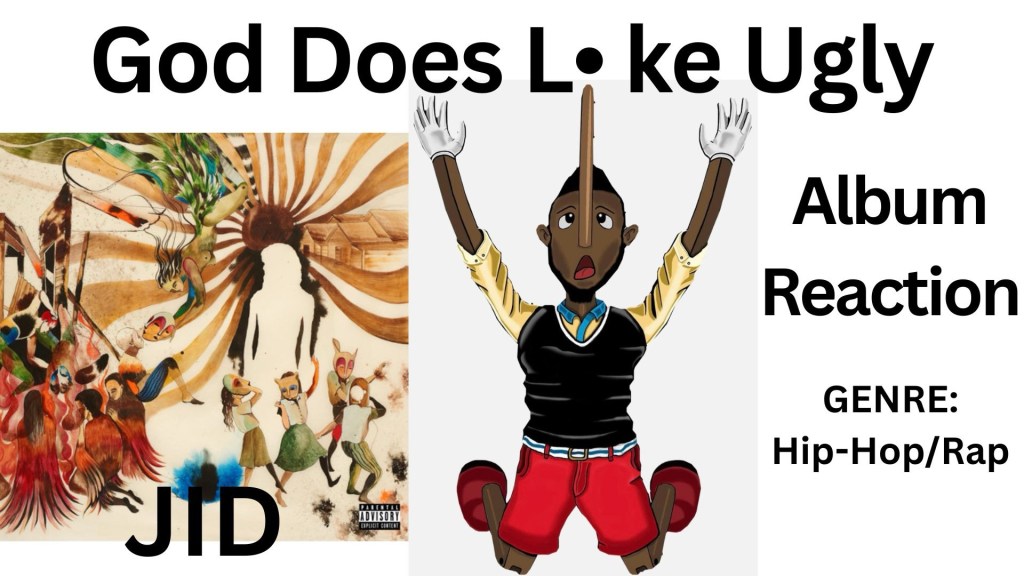
It’s been a long time coming, three years, but after his #CeilingChallenge he is no conscience rapper he just likes what he likes. JID’s latest album, God Does Like Ugly (released stacked 2025 industry release date), cements his status as one of hip-hop’s sharpest lyricists. If music is going back to regional sounds how would an East Atlanta rapper garner new audiences and attentions; and show his technically proficient emceeing.
As I examined JID’s “God Does Like Ugly,” I was blown away by how it builds on the lyrical density of his previous work while exploring themes of growth, karma, and spirituality. With production that is cinematic and varied, the 15-track album clocks in at around an hour and feels ambitious and introspective at the same time. My rating would be 8/10-while the cohesion is not as flawless as “The Forever Story,” JID’s pen game is sharper and his standout features from Westside Gunn, Vince Staples, and Clipse elevate the album without overshadowing its star. JID can say he is doing it because he is cold not because of J. Cole. Let’s talk about the album, track by track, the highs, the lows, and everything in between. Just listened to it, and now I’m ready to break it down.
1. YouUgly (feat. Westside Gunn): Has JID produced his Meek Mill Dreams and Nightmares (Intro) moment. Right out the gate, this opener slapped me with its dark, glitchy beat and aggressive energy—it’s like JID is declaring war on doubters and industry BS. The beat switches keep it unpredictable, weaving in conversational bars with sharp observations, like lying “from the depths of hell with angel wings.” Westside Gunn’s verse adds that gritty contrast, making it a true banger. It’s got this reckless poetic vibe that had me replaying it instantly. The album’s thesis on resilience and defiance is set in this aggressive, high-energy opener. JID and Westside Gunn deliver stacked verses over stuttering 808s, live drumstick snares, and dizzying shifts from aggravating bass to gospel organ. Several reviews have called it the best opening of the year, with heavy bass and crooked percussion, while another has called it the most disarming opener yet, as it pits haters and sales checkers against each other, thus making it an endurance test of lyrical performance.
2. Glory: This one hit me like a motivational sermon, with epic gospel chops and JID reflecting on his come-up and spirituality. The beat switch amps up the hype, and lines about his brother’s incarceration in the “Garden of Eden” analogy really stuck with me—it’s dark yet uplifting. I felt the personal growth theme kicking in here, making it a standout for its emotional depth. Highlighted for its motivational, gospel-tinged sermon-like quality, this track uses stormy piano-driven soul and a transposed soul loop to ground soaring samples, allowing JID’s fast syllables to shine. The beat switch serves as a turning point, elevating the emotional intensity and reinforcing the track’s themes of perseverance and self-reflection. JID’s intricate flow and poignant lyrics, combined with the dynamic production, create a powerful listening experience that resonates deeply with listeners.
3. WRK: Man, this track’s chant-like “work” hook got under my skin—it’s a war cry about hustle and drive, with horror synths and gang vocals creating a massive trap anthem. JID’s wordplay, like comparing his unstoppable drive to cruising ’85 in a ‘52 Dodge, had me nodding along. It’s one of those songs that feels like a flex on his work ethic, though it reminded me a bit of his older stuff. It is important not to sound too Taylor Swiftish in another reaction, but FORCED-POP is at an all-time high in the year 2025.
4. Community (feat. Clipse – Pusha T & Malice): I can tell you about “Community” however I rather just inform you ain’t nobody care when lil bro was laying dead on that block. No bad & boujie Malice is a highlight of Clipse audio adventure on God Does Like Audio and it’s clear both Pusha T and his brother were in album mode when penning these verses taking us bik to the state-skreet where the two blossomed and where JID created an adult life. This boom-bap infused cut had me hooked with its themes of suffering, violence, and cultural resilience. JID’s rage boils over in bars like putting “a bullet in Bob the Builder” to fight gentrification, and passing the mic to Pusha and Malice keeps the storytelling seamless. The hypnotic vocals drive the anger home—it’s urgent and prophetic, one of my favorites for its cohesion and wordplay.
5. Gz: The aggression here floored me—JID embraces the “ugly” side with confrontational lines on racial injustice, like questioning Martin vs. Malcolm. The warped sax loop and bass-heavy production give it a mad, sewer-grate jazz feel. It’s short but packs a punch, fitting perfectly in the album’s early high-energy run. This bass-heavy cut is about gangster image expectations, systemic problems like racial injustice, and cycles of struggle.
6. VCRs (feat. Vince Staples): This moody track snapped me into focus with its dusty, collage-like beat and snapshots of the American Dream gone wrong. JID warns haters not to test him, and Vince’s feature is one of the strongest, adding depth to the soul-searching. It’s got that introspective edge that makes you think about fame’s toll. A standout with spellbinding Spanish guitars, sandy percussion, and dusty collage-like production deconstructing capitalism’s damage. JID warns naysayers while Vince Staples delivers deeply, making it frictionless and potentially special; one calls it the best beat on the album, complemented by guitar flutters.
7. Sk8 (feat. Ciara & Earthgang): The tone shift here was refreshing—a throwback block party jam with Miami Bass vibes and highlife rhythms that made me want to move. If you have never skated backwards or sat out during couples-skate I wouldn’t expect you to understand; It’s JID’s most danceable track yet, with Ciara and Earthgang bringing melodic joy. For my ladies who always wanted to do it like a boy this is the fun record of the album where JID pen is less wordy and just let as the youth say let the vibe win! I appreciated the kinetic fun after the heavier start.
8. What We On (feat. Don Toliver): This dreamy, spacey cut with reversed bass and autotune had a vibey, eerie Silent Hill feel, but it dragged a bit for me—Don Toliver’s part felt phoned in. Still, it’s a solid flex, though not as gripping as the surrounding tracks.
9. Wholeheartedly (feat. Ty Dolla $ign & 6lack): The orchestral strings and harmonies here gripped me emotionally—it’s like a slower, more vulnerable “Kody Blu 31.” Ty and 6lack’s cameos create this shared ache, making it a beautiful breather in the album’s midpoint. An orchestral ache with creaking strings and choirs, it’s one of JID’s best sung performances, evoking shared emotions, but criticized for limp production and not emphasizing concepts, serving as a soulful counterpart to darker tracks.
10. No Boo (feat. Jessie Reyez & Mereba): This luxurious R&B fusion with sultry vocals and piano had me in my feelings—JID’s smooth singing in Spanish alongside Reyez is a highlight. It’s lush and romantic, though it borders on generic radio fare at times. The most luxuriant moment, with floating piano and rich male-female vocals in a back-and-forth conversation, JID in his R&B bag and Reyez sultry. It’s compared to “We Cry Together” but criticized for not reaching vulnerability, though it livens the album.
11. And We Vibing: As a brief interlude, this stacked-voice moment felt heavy with elliptical meaning—a quick palate cleanser that sets up the final stretch. It’s subtle but adds to the album’s layered vibe.
12. On McAfee : This hit like a late-night freestyle—nonchalant yet precise, with rapid bars that land like snipers. It’s a fun, grinning track that could’ve been an EP leftover, but it keeps the energy high.
13. Of Blue (feat. Mereba): A multi-part epic with soft guitars and angelic vocals easing into calm before bursts, confronting self-doubt, religious exploitation, and institutional issues. It’s optimistic yet heavy-handed, with phases tripping over each other in its six minutes. This 6-minute epic bowled me over with its soft guitars turning into a beat-switch sermon on self-doubt and demons. The optimistic chorus about light through darkness is inspirational, though it can feel heavy-handed. Mereba’s angelic vocals elevate it.
14. K-Word (feat. Pastor Troy): The cinematic guitars and shifting moods made this intense karma meditation feel scriptural—part confession, part battle cry. There s a lot going on here, and it’s a dense, dramatic standout that rewards close listening.
15. For Keeps: Ending on this gut-punch recount of JID’s come-up—from SoundCloud uploads to fatherhood—left me emotional. The plainspoken finale is a reflection on early career struggles, paying homage to fans and ending with JID’s child, confirming fatherhood. It’s thankful and accepting of horrors as missions, reading like a memo to his past self. The kid’s cameo asking if “Daddy got best bars in the world?” is heartwarming and bittersweet, wrapping the album perfectly.
In the end, this album grew on me with each spin—it’s dense and rewarding, though some critics call it overstuffed. Fan reactions echo my excitement, with many praising the flows, production, and no-skips feel. If you’re a JID stan like myself, it’s essential; for newcomers, it’s a showcase of why he’s one of the best out. God Does Like Ugly is a must-listen for JID fans and newcomers alike, proving he’s a force independent of mentor J. Cole.
 OBK CHANNEL
Leave a comment